The Real Cost of Winging It
What a week of wasted fryer oil, a text from the delivery room, and 52% turnover have in common.
Eamonn Best
Founder, Lattify · March 17, 2026
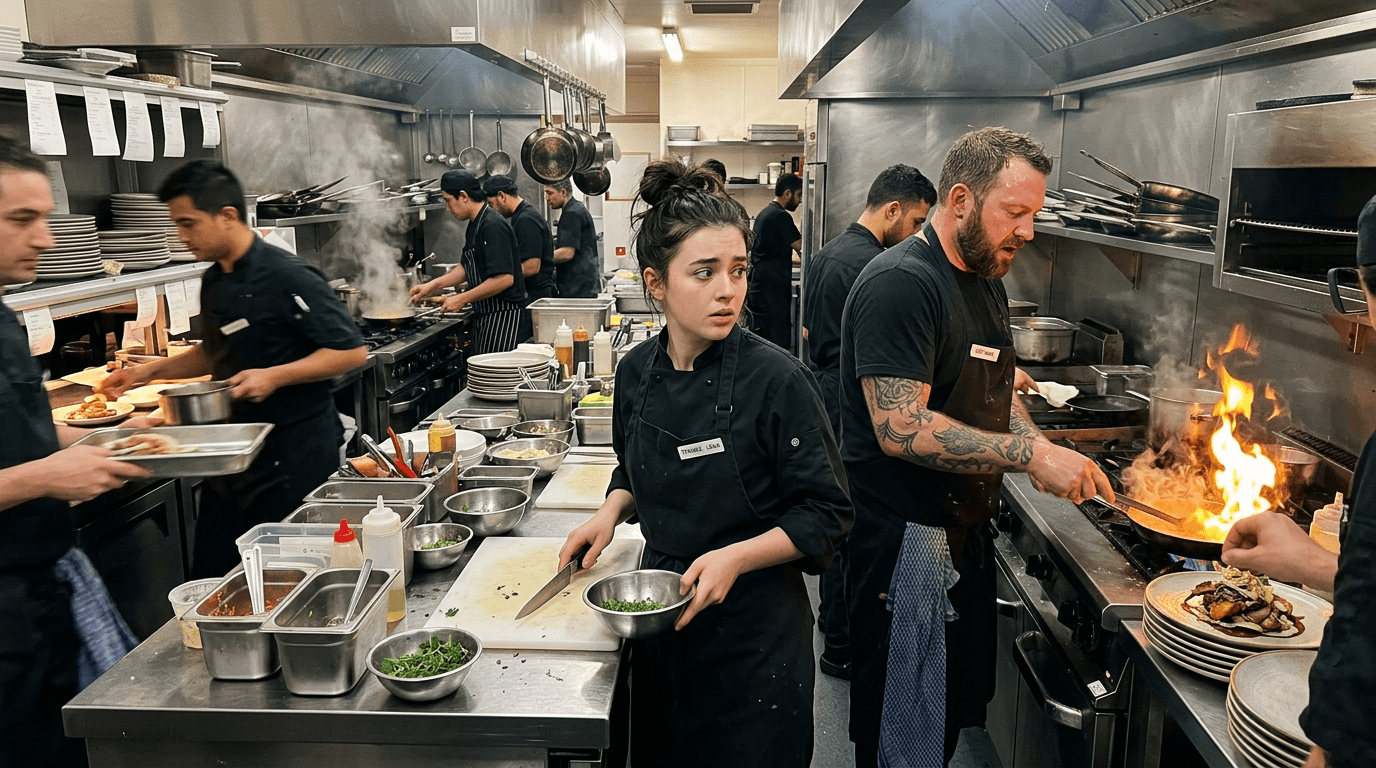
You're a business owner - that means you wear a million hats. Including head of training. Be honest: is that why you started your company?
Here's how training actually works in most hospitality businesses. The new starter shadows someone for a shift or two, picks up bits and pieces, and eventually - hopefully - figures it out. Or they don't. They're afraid to ask questions, they mess something up, you let them go, and the whole cycle starts again.
Most owners have just accepted this as part of the job. But it's not free - it costs. It costs you time. It costs your best people their patience. It costs your brand. And it costs you money in places you've probably stopped counting.
The fryer oil incident
A new closer at a restaurant I spoke to drained the fryer oil every single night and refilled it fresh each morning. For a week. Nobody told him you only change it on Sundays. That's north of £300 in oil before anyone caught it - because the opener assumed the closer knew, and the closer assumed this was just how it worked.
We could laugh about it, but I doubt the owner did. Or the environment.
It wasn't the employee's fault. Nobody showed him what right looks like. Maybe he just guessed... wrongly. But the cost still landed on the owner.
Where the money actually goes
Wrong portions, spoiled prep, dishes sent back. And sometimes it's worse than waste - it's an allergen failure that puts someone in hospital. Each one feels small on its own. Across a week, across a team, it adds up. According to WRAP, UK restaurants lose an average of £10,000 a year to food waste. Much of that comes from preparation errors: wrong portions, unlabelled containers, prep done twice because nobody checked what was already in the walk-in. In a lot of venues, that is at least partly a training problem.
Then there's your time. Every time you re-explain the close, walk someone through prep setup again, or jump on the floor because something went sideways - that's you solving a problem a five-minute guide could have prevented. One owner I spoke to went into labour on a Tuesday. By Wednesday morning the new shift lead had already texted her twice - once for the alarm code, once to ask where the float was kept. She was literally in the delivery room responding to a message about £150 in change.
How many times have you explained the same thing this year? To how many different people?
The numbers behind the churn
According to CIPD, UK hospitality has the highest staff turnover of any industry - around 52%. For context, finance turns over at 27%. Professional services at 29%. Hospitality is nearly double. And unlike those industries, every gap hits the floor immediately - your customers feel it on a Friday night.
A venue with 15 staff at 40% turnover means 6 replacements a year. At £3,000–£5,000 per head, that's £24,000–£30,000 a year just on churn. On 5–10% margins, you'd need £240,000–£600,000 in extra revenue to cover it.
And according to The Access Group, 42% of new hospitality staff leave within the first 90 days. Nearly half your new hires gone before their third month.
The training problem
The easy explanation is that the bad hires get weeded out. But is that really what's happening every time?
A new prep cook who doesn't speak great English nods along during training because he's too embarrassed to say he didn't understand. Three weeks later, he's gone, and everyone decides he wasn't up to it. But if he never really understood the training in the first place, what exactly were you measuring?
A new bartender gets shown the till once on a busy Friday night. Two days later, she comps the wrong item, closes the wrong table, and the cash-up is off. Now everyone thinks she's careless. She was guessing. She'd been shown too quickly, in the middle of service, with no way to check the process once things got busy. The training failed her.
Every one of them needed more than they got on day one.
The most commonly cited reason people leave in that first 90 days? The job didn't match their expectations. They knew the hours. They knew the pay. Something else fell short - and whatever it was, it happened fast enough that they were gone in twelve weeks.
As Lee Woolley, director of learning at Stonegate Group, put it: "We haven't got a recruitment problem, we've got a retention problem."
And if you retain someone past that 90-day window, they're far more likely to stay long-term. The gap between losing someone and keeping them is narrow. What happens in that gap is whether the new person felt set up to succeed - or left to figure it out alone.
A better way to onboard new starters
Your new starter arrives on Monday. An hour into their induction, they've gone through an interactive guide on their phone showing how you close - step by step, broken down from a quick video your best closer filmed. They know how you prep the walk-in, how you label everything, where the float is kept, how the fryer oil schedule works. Each step is its own thing. They can jump to step 4 without sitting through the rest.
Because it's filmed in your venue, they already know where your vacuum cleaner lives. They know which colour keg tube to change. They know which shelf the oat milk goes on. Your venue, your setup, your way of doing things. And because they can see it, it doesn't matter if English isn't their first language. Your new prep cook doesn't have to nod along pretending he understood. He can work through it at his own pace, revisit any step, and walk in ready.
There's a reason it's built on video. Think about it - when you're going somewhere new, do you prefer written directions or looking at a map? Your staff are the same. They learn how to change a keg by watching someone do it.
Why doesn't this already exist?
Because until recently, it couldn't. Turning a raw phone video into a structured, step-by-step interactive guide - automatically - wasn't possible twelve months ago. The AI needed to watch a video, understand what's happening in each moment, and break it into something someone can actually follow. That technology didn't exist.
That's why training in hospitality has been stuck between two bad options for decades: a manual nobody reads, or shadowing someone who's too busy to teach. Owners cared. They just had no practical alternative.
Sure, you could upload a video to ChatGPT and get a written guide. But then what? You can't assign it. You can't see if anyone read it. You can't tell where they got confused. They can't ask questions if something doesn't make sense. And when you change supplier next month, that doc is already dead.
You could send round a video on WhatsApp. Fine. Now it's either buried in a chat thread or sitting in their camera roll between memes and 17 videos of their friend's cat. Either way, when they need one specific step, they're still scrubbing through the whole thing and hoping they land in the right place.
That's what I built Lattify to do. Your best person films the task once, on any phone camera. Lattify's AI - purpose-built, not a general chatbot - watches the video, understands what's happening, and turns it into a structured interactive guide. You can edit it, assign it, track who's completed it, see which steps trip people up, and keep it current as your business changes.
One video, one guide, always up to date.
The owners who sort this out first will win
Let's go back to the closer who drained the fryer oil every night for a week. All it would have taken was one guide from the last person who did it right. Five minutes. Done forever.
The owners who figure this out will get their evenings back. They'll stop fielding texts at 5am about the alarm code. They'll actually be able to step away - because the new person has everything they need, on their phone, before their first shift.
That's what a system looks like.
If any of this sounded familiar, we built Lattify for exactly this problem.
Join the Waitlist