Sink or swim is bad management. And it's costing you
Hospitality treats deep-end onboarding as a virtue. The research is unanimous that it's costing you money - and the 'simple jobs' excuse fell apart years ago.
Eamonn Best
Founder, Lattify · May 3, 2026
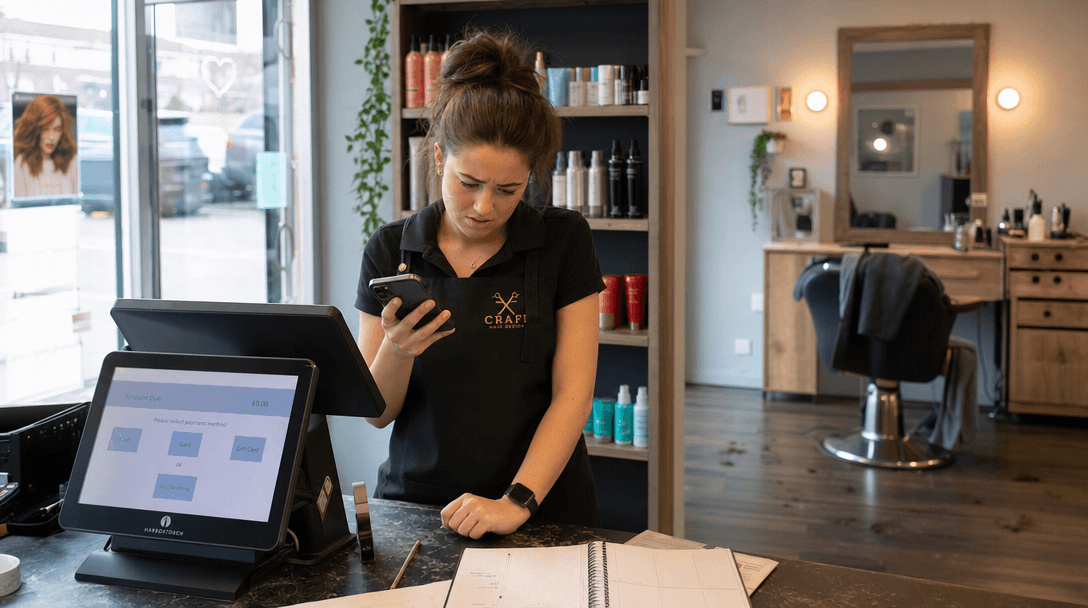
Yesterday's new hire is gone today. Three shifts and a no-show on Sunday. You text her, she doesn't reply. You shrug it off as "she couldn't hack it" and post the job again on Indeed.
Here's what actually happened over those three shifts. Day one she got 30 minutes of intro on a Friday night while service was already building. The senior who was meant to walk her through the close was pulled to cover brunch the next morning. By her second shift she was on a section. By her third, a customer asked for a refund and she didn't know how to do a void. She asked the manager. The manager was in the kitchen sorting a wrong order. The customer waited five minutes, then left a one-star review on the way out. Sunday morning she decided she was done.
That sequence is so common it's been pre-packaged as a virtue. "Sink or swim." "Real shift sorts them out." "Builds character."
The hospitality default
Talk to enough operators and you start hearing the same lines about training. "I learned that way and I turned out fine." "Best way to learn is on the floor." "If they can't handle a busy shift on day one they're not going to last anyway."
These are old beliefs and they sound right. They sound like the no-nonsense wisdom of an industry that doesn't have time for hand-holding. The thing they all share is that they treat "no proper training" as a strategy rather than what it actually is, which is a cost-cutting decision wearing a costume.
Most operators I've talked to don't even register that they're doing this. They believe in training. They've got an induction document somewhere. They also believe what really sorts the keepers from the leavers is the deep end. The induction doc is a gesture, and the deep end is the actual test.
What the research actually says
The research literature has a different view. "Sink or swim" onboarding has been studied for decades and the findings are unanimous in a way social science rarely is.
Research summarised by SHRM, citing onboarding analysts Click Boarding, shows that organisations with a standard onboarding process experience 50% greater new-hire productivity. New employees who went through a structured onboarding programme are 58% more likely to still be at the company three years later. The foundational academic work on this comes from Talya Bauer at Portland State University, whose SHRM Foundation report on onboarding socialisation has been the reference text for decades.
The mechanism behind these numbers is the same in any role. When an employer signals from day one that they aren't investing in you, you read it as them not valuing you. The psychological contract that gets formed in the first week determines what kind of employee you become. PrimeGenesis puts it bluntly: sink or swim "sets up a very talented individual to potentially fail in their new role."
The new starter got a clear early signal that the venue didn't think she was worth thirty minutes of structured time, and she responded the way humans respond when they're told they don't matter. Hospitality calls this "not handling the pressure."
"But our jobs are simple"
The other belief that keeps deep-end training alive is that hospitality jobs don't really need much training. Pour a pint, take an order, plate the food, sweep the floor. How complicated can it be?
Try it. A modern hospitality shift involves the POS, which on most systems handles fraud prevention, labour control, stock control, and allergen tagging, and on many systems requires manager-level access to update the allergen tags, which slows responsiveness when a customer's diet is on the line. The scheduling app (HotSchedules, Deputy, 7shifts) the new starter has to learn to access shifts, swap covers, and clock in. The forecasting tool that drives prep volume. The card terminal with its dozen edge cases (split bills, voids, refunds, tips, contactless limits, declined cards, key-entered backup payments). The delivery platforms running orders in parallel: Uber Eats, Deliveroo, Just Eat, each with their own ticket flow. The reservation system. The complaint protocol. The food hygiene logic that determines what gets recorded where.
None of these existed in 1985, when "pour a pint, take an order" was actually the job. Modern hospitality is harder than 1985 hospitality.
Then there's allergens. Industry data shows that around 1 in 10 customers have a food allergy or intolerance, diners now expect proactive visual disclosure on every menu item, and 74% of customers are more likely to return to venues with clear dietary labelling. The new starter who guesses on a Friday night because nobody walked her through the allergen tagging on the POS is being thrown into a regulatory and customer-safety surface most owners don't fully understand themselves. That's a different kind of deep end from pouring a pint.
The "simple jobs" framing is what justifies under-investing in training. Once you actually count what a modern shift involves, the framing falls apart.
The corporate world isn't a high bar
Here's where it gets interesting. The hospitality default sits inside a broader pattern of bad corporate onboarding. According to Gallup, only 12% of US employees say their company has a good onboarding process. Eighty-eight percent say it's mediocre or absent. SHRM data shows that 20% of all employee turnover happens in the first 45 days, across every industry.
The bar most companies set is low. Even modest investment in structured onboarding puts a venue ahead of where 88% of employers operate.
I came from a tech company where deep-end onboarding wasn't tolerated. The first six weeks for any hire were structured, deliberate, and treated as a project the manager owned. The reasoning was simple: the data on what sink or swim costs is decades old, and the 50% productivity gap and 58% retention gap show up on a P&L. There was no version of "they couldn't hack it." There was only "we set them up badly."
"We can't afford structured onboarding"
The reason hospitality has been allowed to keep doing this longer than most industries is that structured onboarding used to be expensive. Building a real onboarding programme required L&D headcount, an LMS subscription, content development, and ongoing maintenance to keep the content current. For a 12-staff venue, that maths never added up. The "we'll just have them shadow" default wasn't always laziness. It was sometimes the only thing the budget could carry. The cost showed up elsewhere - I've worked the maths and a typical operator carries about £51,000 a year of invisible training tax - but the upfront cost felt prohibitive.
That changed in the last twelve months. SHRM 2025 data shows that formal onboarding produces 34% faster ramp to productivity, and that companies using AI in onboarding saw a 29% reduction in time-to-productivity. The cost barrier that used to justify the deep-end approach has collapsed. What enterprises spent millions building, an SMB can now produce by filming a phone video.
What I built to fix this
That's why I built Lattify. Your best closer films the close on a phone, in 90 seconds. The AI watches the video and produces a structured guide with the steps, timings, and equipment extracted automatically. Every new starter gets the relevant guides on their phone before their first shift. They walk in already knowing the layout, the till basics, the close, the allergen flow on your specific POS. They have a foothold.
The senior who used to spend twenty minutes on day one walking through the till is freed up to do the thing only they can do, which is teach judgment. When to comp a table. How to read a customer. When to push a special. The things that don't fit in any guide. Structured onboarding clears the way for the senior to teach the actual craft.
The new hire from the opening, the one who lasted three shifts. She walked in willing and capable. She got a normal hospitality first week and made the rational decision to leave.
You can run the business, or you can run the tradition. Most operators are paying about £20,000 a year to keep running the tradition.
If any of this sounded familiar, we built Lattify for exactly this problem.
Join the Waitlist