Where shadowing breaks
Shadowing is fine for normal days. Here are the specific shifts where it structurally fails - and what they cost you.
Eamonn Best
Founder, Lattify · April 30, 2026
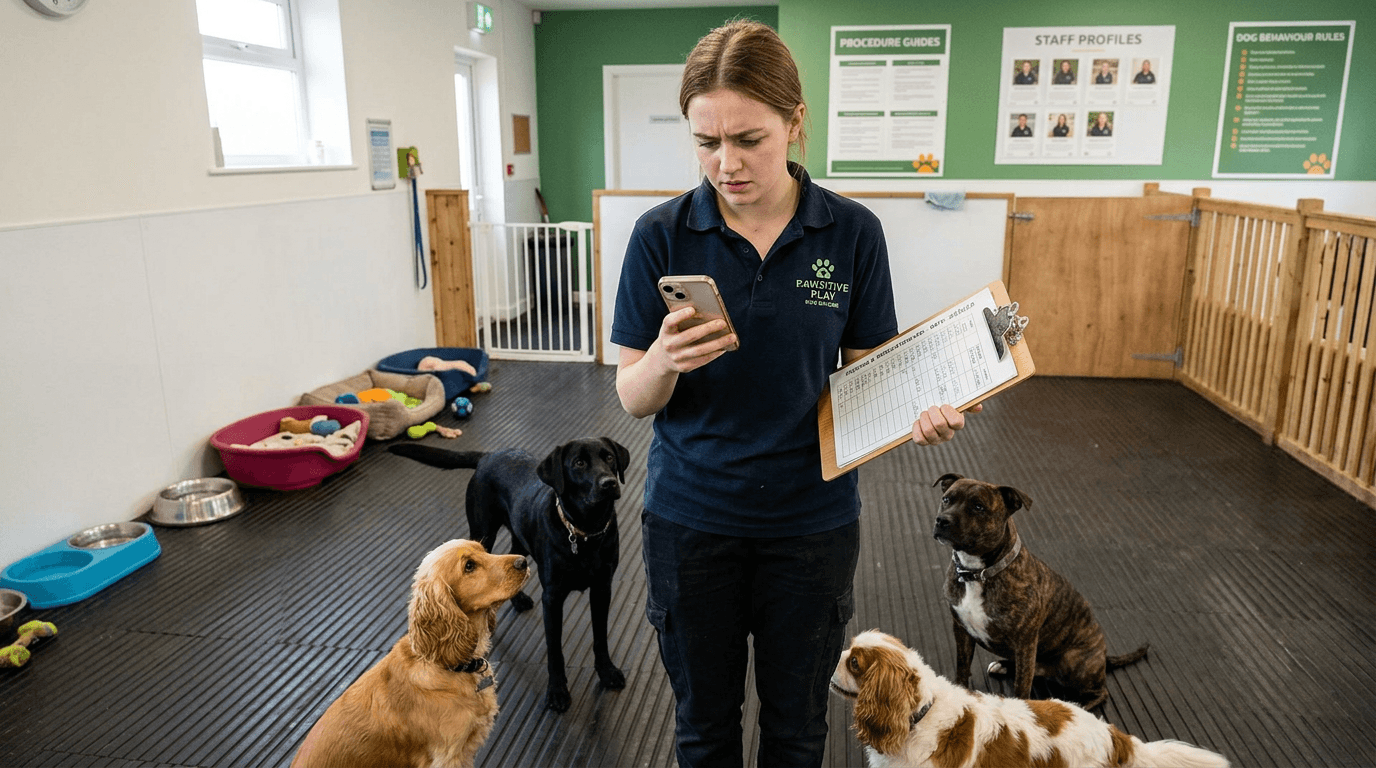
The senior bartender with three years tenure gives notice on a Tuesday. By Friday she's gone. On Saturday, the new starter you'd planned to have her train arrives for her induction shift.
Now what?
If you've been an owner for any length of time, you've had a version of this moment. Most of us nod along when someone asks how we train people, and the answer is the same: "they shadow." It's the truth on a normal day. Your best person walks the new starter through it, they pick stuff up by watching, you correct as you go.
That works. Until it doesn't.
I want to walk through the specific shifts where shadowing breaks. Shadowing is exactly what good operators have always done. There are eight predictable moments where the model fails, though, and every operator I know has had to handle at least three of them this year.
The Sunday with no senior
It's the second Sunday of the month. The forecast is slow. You schedule one senior and one new starter. The senior calls in sick at 11.40am. You're 70 miles away at your in-laws.
Your new starter is now alone behind the bar. The till is showing a refund prompt because a customer wants their card refunded for a meal that came out wrong. She's been trained on how to take an order. The refund process is something the senior was going to walk her through "next time it comes up."
She's holding her phone deciding whether to call you.
Shadowing requires a shadow. When the shadow isn't there, the new starter has to guess.
When the senior gives notice
Three years she's been there. She knows the regulars. She knows that table 7 is always Mr Carmichael and his wife and they need their gluten-free option ready before they sit down. She knows the supplier who delivers on Saturdays when the van's broken down. She knows which cuts work for the Tuesday special and which ones the chef hates.
She gives two weeks. You meant to film her doing the closing checklist. You meant to write down the supplier shortcuts. You meant to introduce her properly to her replacement.
Instead it's Friday night and you're handing her a card and a bottle of wine. Monday morning her replacement starts and you're trying to remember which Saturday the supplier prefers and what time table 7 normally arrives.
The replacement has shadowed her for one week. Three years of tacit knowledge transferred in five days. We pretend that works because we don't have a choice.
The language gap shadowing pretends doesn't exist
A new prep cook starts. He's Polish. His English is decent but he's cautious about admitting when he doesn't catch something. He shadows your sous for a shift. The sous explains how the brine's made, the timings on the rotisserie, the cleaning specs.
He nods. He understands maybe 60% of it. The other 40% he'll figure out, or guess, or get wrong.
Three weeks later, you let him go because he's "not getting it." He got the performance of training. The shadowing pretended a comprehension check happened.
According to CIPD, UK hospitality has 52% turnover, the highest of any industry. A meaningful chunk of the workforce is foreign-born, especially in London. Every shadowing session that happens in fluent English with someone whose second or third language is English is essentially comprehension theatre.
The rare procedures that never come up
The fire alarm test happens every quarter. The deep clean schedule kicks in once a month. The refund process maybe twice a week. The allergen brief, the formal one, whenever you onboard a new menu.
A new starter shadowed during a normal week sees none of these. The senior training them is on a normal shift. The rare procedures happen on the shifts the new starter isn't there for.
When the fire alarm test does come up and the senior happens to be off, the new starter is the one who has to do it. They've never done it. They tick the box anyway.
That's how a real fire alarm test gets logged as "completed" without actually being completed. When the inspector visits and asks for the records, you've got a signature from someone who guessed.
Three new starters and one senior
Hiring season hits. You take on three people at once because you've got two leavers and a planned expansion. You have one senior who can train. The math doesn't work.
You try to rotate. The senior shadows person A on Monday, person B on Tuesday, person C on Wednesday. By Thursday person A has forgotten what they learned on Monday because they haven't done it again. The senior is exhausted. The shadowing has become a sprint through the high points.
The Access Group reports that 42% of new hospitality staff leave within the first 90 days. The most cited reason is that the job didn't match expectations. When you hire three people at once and run them through a 1-to-3 ratio, none of them get a real onboarding. Two of them probably leave by week six. The senior was running a ratio nobody could sustain.
Multi-location reality
You're a two-site operator. Your best closer is at site one. Your new closer is at site three. Their shifts overlap on Wednesdays. Site one is open until 11pm, site three until midnight, so the closing shadow shift happens between 9pm and 11pm at site one. The new closer drives to site three at 11pm and tries to apply what she just learned in a different building with different equipment to a different layout.
Two hours of shadowing and the new closer is at a different site facing different fixtures.
Most multi-location operators eventually hire a "training manager" whose job is to drive between sites doing this. That person costs £35,000 a year. They cover six new starters on a good month. Each of them gets a rushed shadow shift in a venue they'll never work in.
When the senior is sick for two weeks
The senior who's been training your new starters has a lung infection in February. She's off for two weeks. During those two weeks you take on a new server. There's no one else who can shadow them properly. You promote a junior to do the shadowing for two weeks because you have no choice.
The junior teaches the new starter the things the junior was taught poorly. The new starter inherits the gaps. By the time the senior is back, the new starter has been on shift for nine days and has built habits the senior now has to undo.
Shadowing requires the holder to be there.
The customer asks something nobody trained for
A customer asks the new starter if you do gluten-free options. The new starter doesn't know. They guess. They say yes.
The customer orders. Their order arrives. They eat it. The next day they ring to say they reacted badly. You apologise, refund, send a voucher. You tell the new starter they should have asked. The new starter says nobody told them.
That's correct. Nobody did. The shadowing covered the regular menu. The question that hadn't come up during the shadow shift went uncovered.
Now your insurance is interested. So is the EHO. So are the regulars who saw the post on Google.
What this actually costs
Numbers on the eight failures.
The Sunday with no senior: a botched refund, an angry customer, possibly a bad review. £200 to £500 per incident.
The senior leaving: three to eight weeks of inconsistency while the next person picks up the gaps. £3,000 to £8,000.
The language gap: a new hire let go three weeks in. Replacement cost £5,000.
The rare procedure missed: at minimum, a recordkeeping failure. At worst, a fire alarm that didn't actually get tested. £500 to £5,000 plus potential HSE attention.
Three hires at once with one senior: two quit at week three. £10,000 in replacement costs.
Multi-location shadowing: ongoing inconsistency between sites. Customer reviews drift. £5,000 to £20,000 per year.
Senior sick for two weeks: a new starter built on shaky foundations who probably leaves within 90 days. Add £5,000.
Customer asks something nobody trained for: depends entirely on what they asked. Can be £100. Can be £20,000. Can be your insurance excess and a public health investigation.
Add it up over a year and you're somewhere between £18,000 and £80,000 of cost from shadowing's structural gaps. I modelled the typical operator's invisible training tax at £51,000 a year. Most of that £51,000 is the eight scenarios above, folded into other categories.
The real root cause
Shadowing has been the default for a hundred years because there was no alternative. You can't transfer tacit knowledge without a person doing the showing. The owner who pioneered "everyone learns by doing" was right at the time.
What's broken is that shadowing requires the senior to be there, healthy, available, on the same shift, in the same building, speaking the same language as the new starter, on the day a rare procedure happens to come up, with enough capacity to handle three trainees.
Each of those is a coin flip. Eight coin flips per new hire. The expected outcome is that two or three of them go badly.
What I built to fix this
Shadowing keeps doing what it does well. What I built Lattify for is the eight scenarios above.
Your best closer films herself doing the close on a phone, in 90 seconds. The AI watches the video and produces a structured guide. When the senior is sick, the new starter has the close on her phone. When it's a Sunday with no senior on shift, the refund process is on her phone. When the Polish prep cook didn't catch what the sous said, he can replay it in Polish, at his own pace, with subtitles.
Shadowing-plus-Lattify is the real baseline. The senior trains in person during her shifts. The phone covers every shift, every starter, every language.
The senior bartender from the opening, the one who gave notice on a Tuesday: three years of her tacit knowledge would normally walk out with her on Friday. Before she does, she spends two hours filming the things only she knows. The regulars. The closing checklist. The supplier shortcuts. The £20 things that take an hour to explain in person. The new starter on Saturday opens the app, sees five guides assigned to her, and gets to work. What the senior leaves behind is a system that works without her.
If any of this sounded familiar, we built Lattify for exactly this problem.
Join the Waitlist